| Both zones warm; compressor runs continuously but produces minimal head pressure |
Refrigerant loss (leak or undercharge) |
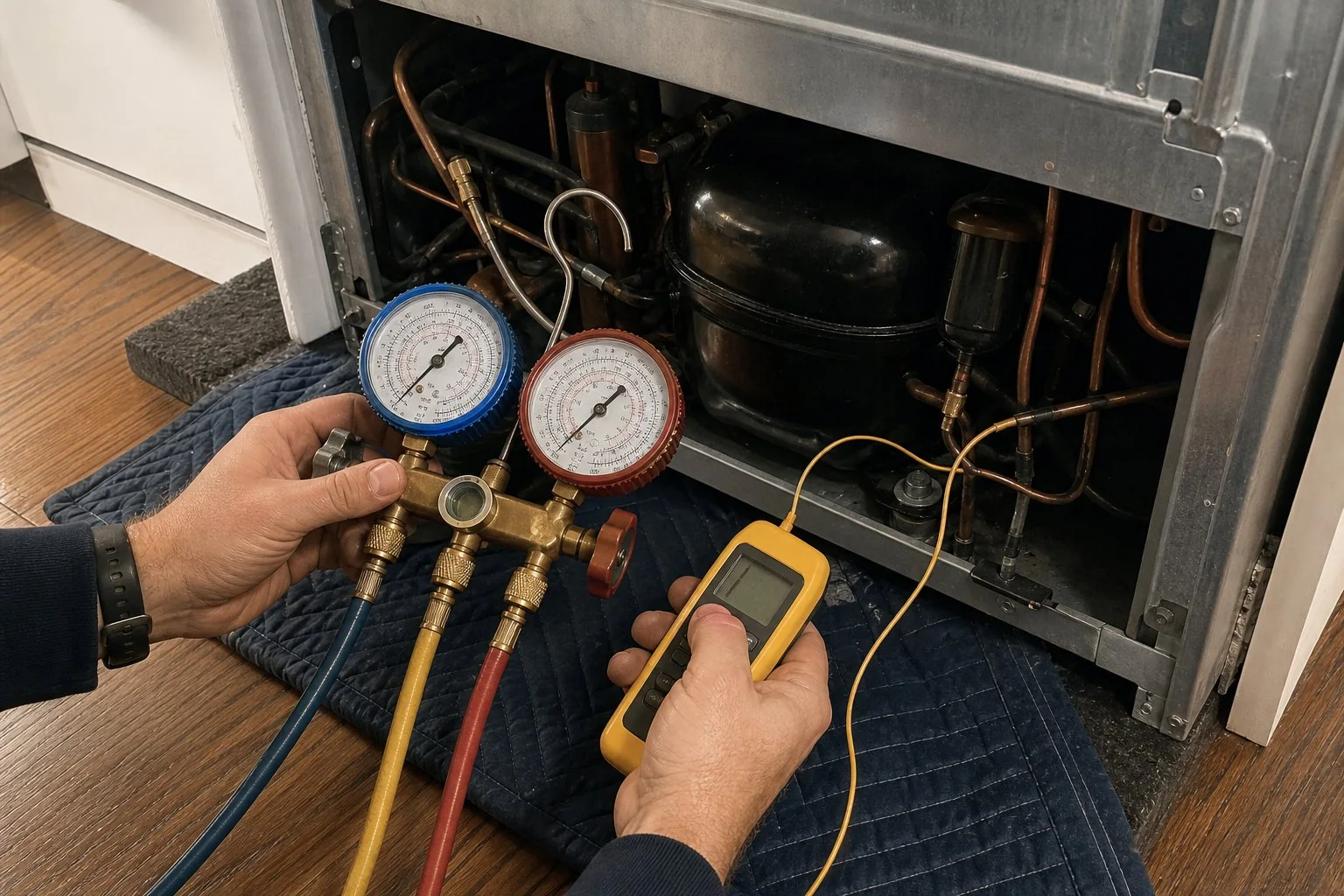
Suction/discharge pressure at service ports; compare to spec by model/serial (verify by model/serial — do not use generic values) |
Dirty condenser; condenser fan failure — rule these out first as they produce the same surface symptom |
EPA-certified leak search, repair, evacuate, recharge to OEM specification; sealed-system estimate $1,500+, confirm by phone |
| Compressor does not start; clicking sound at startup then silence |
Start relay or overload protector |
Remove relay, shake — rattling indicates failed relay. Resistance check per OEM spec (verify by model/serial). Replace relay and retest before assuming compressor failure. |
Assuming compressor failure; start relay is a $30–$60 part that mimics a dead compressor exactly |
OEM start relay replacement; retest under load. If compressor still won't start after confirmed relay, proceed to LRA test. |
| Compressor starts, runs, but LRA exceeds rated draw; breaker trips or thermal overload opens |
Mechanically seized or winding-shorted compressor |
Clamp-meter LRA measurement at startup; compare to nameplate rating (verify by model/serial). Winding resistance check across terminals. |
Run capacitor failure causes high amp draw on single-phase motor; test and replace capacitor before condemning compressor |
Compressor replacement (OEM or approved equivalent); EPA evacuation and recharge; sealed-system labor applies |
| Fresh-food zone warm; freezer zone normal or slightly warm; evaporator frost only on lower half |
Restricted metering device or partial refrigerant loss |
Evaporator inlet and outlet temperature differential; frost-line boundary inspection; suction pressure reading |
Defrost system failure producing similar frost pattern; defrost heater continuity and defrost thermostat must be confirmed normal first |
If metering device restricted: sealed-system access, flush, component replacement, recharge. If defrost: heater or thermostat replacement only. |
| Continuous condensation or frost accumulation at door perimeter; compressor runtime elevated |
Door gasket leak (indirect sealed-system load) |
Dollar-bill drag test at gasket perimeter; infrared thermometer scan of door frame; compartment humidity observation |
Attributing elevated compressor runtime to refrigerant loss when a compromised gasket is loading the circuit — gasket costs a fraction of sealed-system work |
OEM gasket replacement in correct durometer and profile (verify by model/serial); door hinge and cabinet alignment check before condemning gasket alone |
| Compartment temperature rises slowly over days; unit eventually stabilizes at elevated temperature |
Slow refrigerant leak at fitting, valve core, or brazed joint |
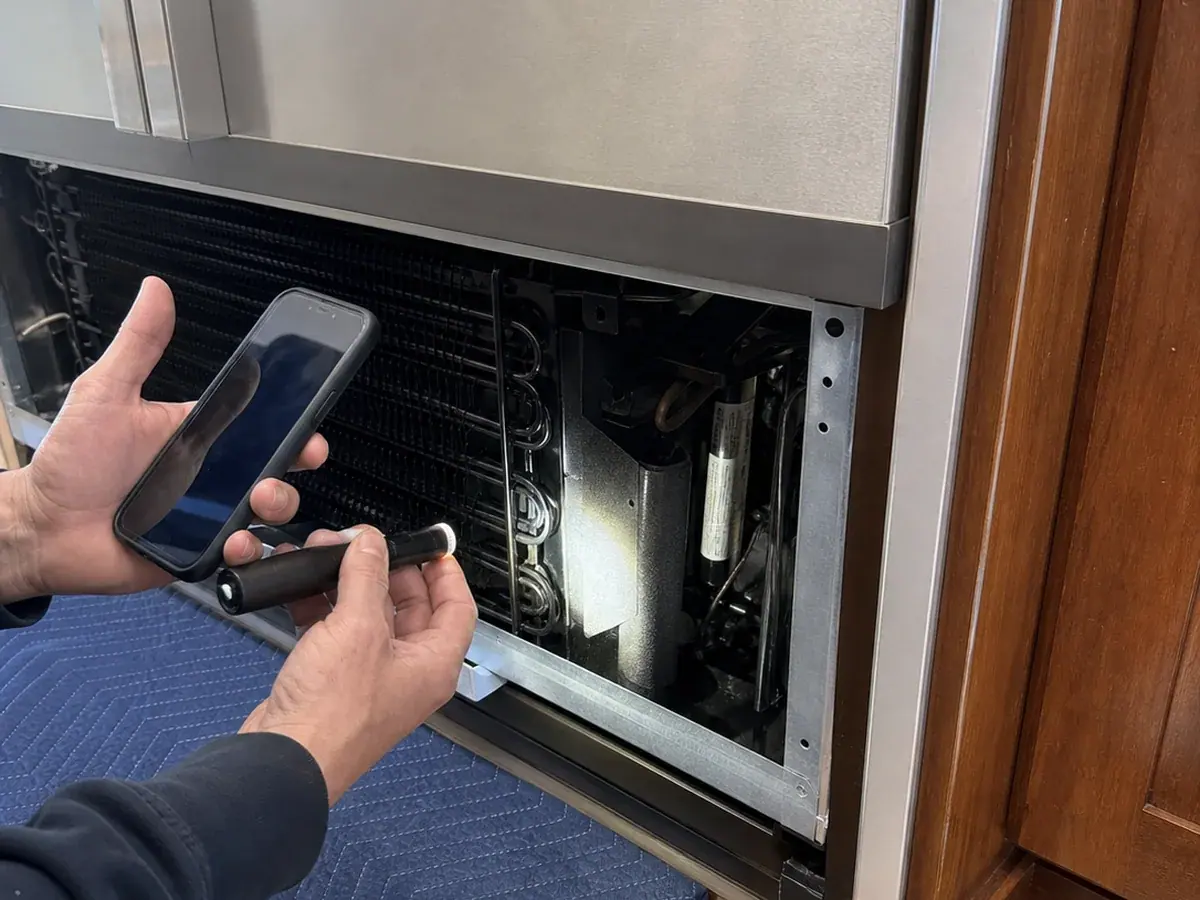
Electronic leak detector at all brazed joints, service-port cores, and coil connections; UV dye inspection if dye was previously introduced (verify by model/serial — not all models accept dye) |
Gradual temperature drift from a failing condenser fan; measure fan motor RPM and amp draw before attributing drift to a leak |
Locate and repair leak source; pressure test and hold; evacuate and recharge. Document repair for unit service record. |
| Sealed-system pressure tests normal; compressor runs; temperatures still elevated |
Condenser coil fouled or condenser fan underperforming |
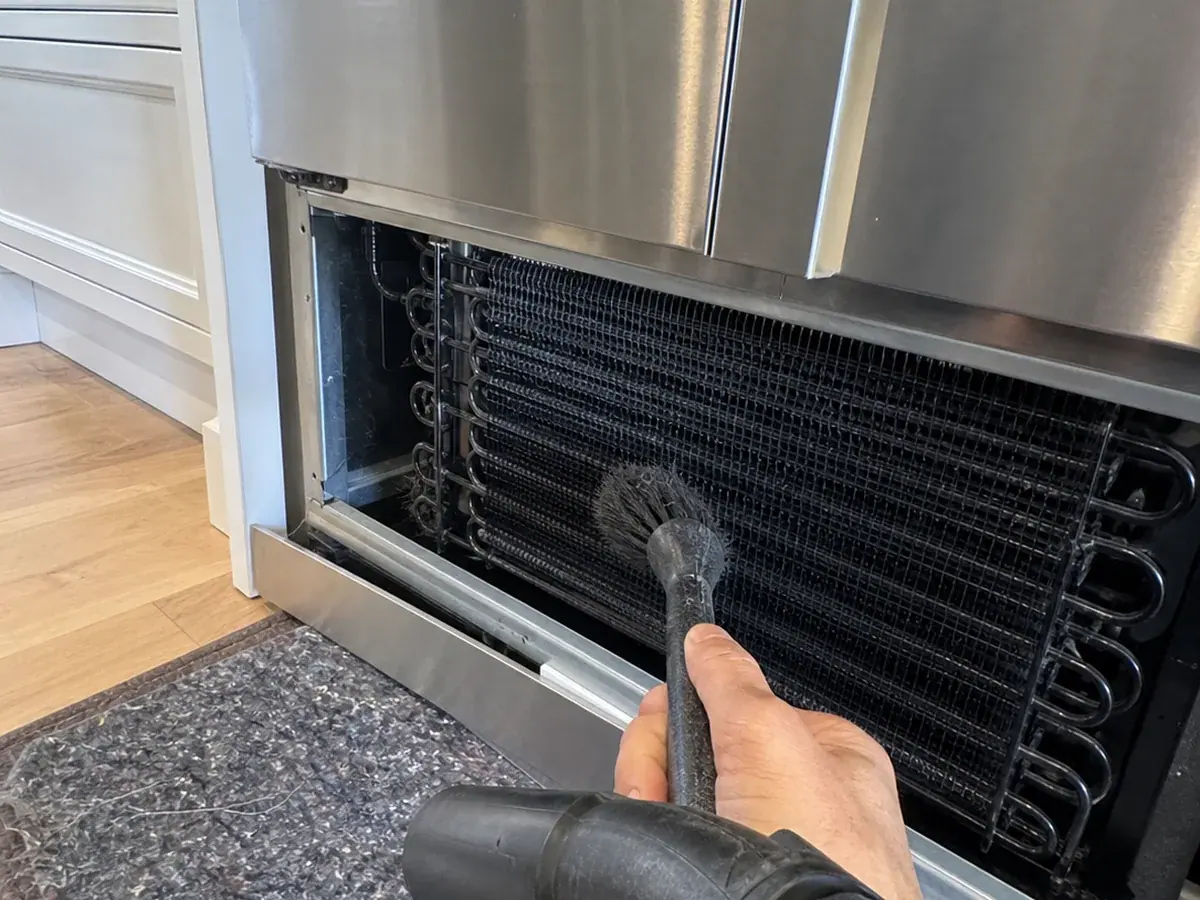
Condenser coil visual and airflow check; fan motor amp draw; return-air temperature at toe-kick versus discharge temperature at top grille |
Assuming sealed-system fault after pressure test — if pressures are normal, the heat-rejection side (condenser) is the most likely remaining cause |
Condenser cleaning; OEM fan motor replacement if amp draw is low or RPM is below spec (verify by model/serial). Retest compartment temperatures. |